



Compound researchMetabolism & Weight
Retatrutide: What Is It, How Does It Work, and What Are Its Potential Benefits?
Retatrutide is an investigational triple hormone receptor agonist that targets GLP-1, GIP and glucagon receptors. Learn how retatrutide works, what current research shows about weight loss, blood sugar control and metabolic health, and which potential benefits are still being studied.
15 min read36 sections
On this page36
Retatrutide Research: What Researchers Currently Know
Retatrutide has become one of the most closely watched experimental medicines in metabolic research. Scientists are studying it primarily for obesity and type 2 diabetes, but research is increasingly examining whether its effects could extend to fatty liver disease, cardiovascular risk factors, kidney health, obstructive sleep apnea, osteoarthritis and other complications associated with obesity.
What makes retatrutide particularly interesting is that it works differently from many existing metabolic drugs. Instead of targeting one or two hormone receptors, retatrutide activates three:
- GLP-1 receptors
- GIP receptors
- Glucagon receptors
For this reason, researchers commonly describe retatrutide as a triple hormone receptor agonist.
Human trials have produced substantial reductions in body weight and improvements in several metabolic measurements. However, retatrutide remains an investigational medicine, and research into many of its possible long-term effects is still ongoing.
This article looks at what scientists currently know and, just as importantly, what they do not yet know.
What Is Retatrutide?
Retatrutide, previously known by the development code LY3437943, is an investigational peptide developed by Eli Lilly.
It was designed to activate three hormone receptors involved in metabolism:
- GLP-1 — glucagon-like peptide-1
- GIP — glucose-dependent insulinotropic polypeptide
- Glucagon
Earlier metabolic medicines generally focused on fewer pathways.
Traditional GLP-1 receptor agonists primarily activate the GLP-1 receptor, while tirzepatide activates both GLP-1 and GIP receptors.
Retatrutide adds a third component: glucagon receptor activation.
Research into the molecule suggests that combining these three pathways may influence several processes simultaneously, including appetite, glucose control, insulin function, fat metabolism and energy expenditure.
Why Target Three Receptors?
A useful way to understand retatrutide is to look at the three pathways individually.
GLP-1
GLP-1 is a naturally occurring hormone released after eating.
Among its effects, GLP-1 signaling can:
- Help stimulate insulin secretion when glucose levels are elevated.
- Reduce glucagon secretion under certain conditions.
- Slow gastric emptying.
- Increase feelings of fullness.
- Reduce appetite and food intake.
These effects help explain why GLP-1-based medicines have become important in obesity and diabetes research.
GIP
GIP is another hormone released in response to food.
It plays a role in:
- Insulin secretion.
- Nutrient handling.
- Glucose metabolism.
- Interactions with fat tissue.
Combining GLP-1 and GIP receptor activation has already been shown to produce substantial metabolic effects.
Glucagon
Glucagon is normally associated with increasing blood glucose when levels become too low.
At first, deliberately activating the glucagon receptor might therefore sound unusual in a medicine being studied for diabetes.
However, glucagon signaling may also influence:
- Energy expenditure.
- Fat metabolism.
- Liver metabolism.
- Nutrient oxidation.
Researchers believe that carefully balancing glucagon activity with GLP-1 and GIP signaling may potentially increase energy expenditure while the other pathways help control appetite and glucose.
This multi-pathway approach is one of the main scientific reasons retatrutide has attracted so much attention.
What Does the Research Show About Weight Loss?
Weight reduction is currently the area with some of the strongest evidence.
An important Phase 2 clinical trial published in the New England Journal of Medicine in 2023 studied adults with obesity or overweight who did not have diabetes.
After 48 weeks, average weight changes included:
| Retatrutide 1 mg | -8.7% |
|---|---|
| Retatrutide 4 mg | -17.1% |
| Retatrutide 8 mg | -22.8% |
| Retatrutide 12 mg | -24.2% |
| Placebo | -2.1% |
At the highest studied dose, the average reduction was approximately 24% of initial body weight after 48 weeks.
These results were striking, but they came from Phase 2 research.
Since then, larger Phase 3 studies have strengthened the evidence.
Phase 3 Research: TRIUMPH-1
In 2026, Phase 3 research from the TRIUMPH program provided additional evidence on retatrutide in adults with obesity.
The studies evaluated once-weekly retatrutide over a substantially longer period than the earlier Phase 2 study.
At higher studied doses, average weight reductions reached levels substantially greater than those observed with placebo.
The Phase 3 findings strengthened the evidence that obesity is likely to be one of the primary areas in which retatrutide could eventually be used if it receives regulatory approval.
However, clinical-trial results should still be interpreted in the context of study populations, dose escalation, treatment duration and medical supervision.
Why Might Retatrutide Reduce Body Weight?
Weight regulation is complicated and involves the brain, digestive system, pancreas, liver, fat tissue and many different hormones.
Retatrutide may influence several components at the same time.
Researchers are particularly interested in three possible mechanisms.
Reduced Appetite
Higher doses of retatrutide have been associated with reductions in hunger and appetite.
Clinical research has reported changes including:
- Reduced perceived hunger.
- Smaller portion sizes.
- Reduced frequency of eating.
- Earlier feelings of fullness.
- Reduced tendency to overeat.
- Changes in food preferences.
These findings suggest that reduced food intake may be an important part of retatrutide-associated weight loss.
However, not every participant will necessarily experience the same effects.
Increased Satiety
GLP-1 and GIP signaling can influence brain pathways involved in appetite and meal termination.
If people feel satisfied with less food, total calorie intake may decrease naturally.
This is one of the established mechanisms behind incretin-based metabolic therapies.
Possible Effects on Energy Expenditure
The glucagon component may distinguish retatrutide from medicines that only target GLP-1 or GLP-1 and GIP receptors.
Preclinical research suggests that glucagon receptor activation may increase energy expenditure and promote the use of stored energy.
Exactly how much this contributes to weight reduction in humans remains under investigation.
Retatrutide and Type 2 Diabetes
Another major area of research is type 2 diabetes.
People with type 2 diabetes commonly experience:
- Insulin resistance.
- Elevated blood glucose.
- Impaired insulin responses.
- Excess body weight.
Because GLP-1 and GIP can affect glucose-dependent insulin secretion, researchers began studying retatrutide early in people with diabetes.
Phase 1, Phase 2 and Phase 3 studies have reported improvements in blood-glucose control alongside substantial weight reduction.
Changes in HbA1c have been particularly important because HbA1c provides an indication of average blood-glucose levels over several months.
These findings suggest that type 2 diabetes could eventually become another important therapeutic application if retatrutide receives regulatory approval.
Long-term comparative studies will still be important for determining how it performs relative to existing diabetes medications.
Retatrutide and Fatty Liver Disease
One of the most interesting secondary research areas involves metabolic dysfunction-associated steatotic liver disease, or MASLD.
MASLD involves excessive accumulation of fat in the liver and is strongly associated with:
- Obesity.
- Insulin resistance.
- Type 2 diabetes.
- Abnormal blood lipids.
Researchers performed a Phase 2 substudy involving participants with obesity and elevated liver fat.
After 24 weeks, average relative liver-fat reductions were approximately:
| 1 mg | 42.9% |
|---|---|
| 4 mg | 57.0% |
| 8 mg | 81.4% |
| 12 mg | 82.4% |
| Placebo | approximately 0% |
At the two highest doses, a large majority of participants reached liver-fat levels below 5% during the study.
These results are scientifically interesting and suggest that retatrutide may have significant effects on fat accumulation in the liver.
However, an important distinction is necessary.
Reducing liver fat is not the same as proving that advanced liver disease has been cured.
Researchers still need to determine whether retatrutide can improve or prevent outcomes such as liver fibrosis, cirrhosis and other serious complications.
Retatrutide and Visceral Fat
Researchers have also examined changes in visceral fat.
Visceral fat is stored around internal organs and is associated with increased metabolic and cardiovascular risk.
Clinical research has shown substantial reductions in visceral adipose tissue during retatrutide treatment.
Subcutaneous abdominal fat has also decreased.
This suggests that the effects of retatrutide may involve more than simply a lower number on the scale.
Researchers are interested in whether reductions in metabolically harmful fat deposits could contribute to improvements in insulin sensitivity, liver health and cardiovascular risk factors.
Retatrutide and Cardiovascular Risk Factors
Researchers are also studying whether retatrutide influences markers associated with cardiovascular disease.
Clinical analyses have reported improvements in several potentially important markers, including:
- Non-HDL cholesterol.
- Apolipoprotein B.
- LDL particle concentrations.
- Triglyceride-rich lipoproteins.
- Small LDL particles.
Some inflammatory biomarkers have also decreased.
High-sensitivity C-reactive protein, for example, has fallen substantially in some clinical research groups.
These findings are encouraging.
However, improvements in cardiovascular risk markers do not automatically prove that a medicine prevents heart attacks, strokes or cardiovascular death.
Dedicated cardiovascular outcome trials are required to answer those questions.
Retatrutide and Kidney Health
Kidney health is another area being explored.
Obesity and type 2 diabetes are both major risk factors for chronic kidney disease.
Researchers have examined measurements including:
- Estimated glomerular filtration rate, or eGFR.
- Urine albumin-to-creatinine ratio, or UACR.
Some studies have reported potentially favorable changes in kidney-related markers, including reductions in albuminuria among certain participants.
However, much of this evidence currently comes from exploratory or post-hoc analyses rather than dedicated kidney-outcome trials.
Researchers therefore cannot yet conclude that retatrutide prevents chronic kidney disease or kidney failure.
The findings are better described as promising research signals.
Retatrutide and Obstructive Sleep Apnea
Obstructive sleep apnea, or OSA, is strongly associated with obesity.
Fat accumulation around the neck and airway, along with other metabolic changes, can increase airway obstruction during sleep.
Because retatrutide can produce substantial weight reduction, researchers have investigated whether it could also reduce the severity of obesity-related sleep apnea.
Phase 3 research has reported significant reductions in apnea-hypopnea events in people with obesity and moderate-to-severe sleep apnea.
These results suggest that obesity-related sleep apnea may become another clinically relevant area of research.
Additional peer-reviewed research will help establish which patients benefit most and how much of the effect is directly related to weight reduction.
Retatrutide and Knee Osteoarthritis
Researchers have also investigated retatrutide in people with obesity and knee osteoarthritis.
Excess body weight increases mechanical load on the knee joint and can contribute to pain, inflammation and reduced mobility.
Weight reduction can therefore improve symptoms even without directly repairing damaged cartilage.
Phase 3 research has reported improvements in knee osteoarthritis pain alongside substantial weight reduction.
Possible reasons include:
- Lower mechanical stress on the joints.
- Improved mobility.
- Reduced systemic inflammation.
- Changes in metabolic health.
However, this does not mean retatrutide regenerates cartilage or directly reverses osteoarthritis.
The distinction between improving symptoms and repairing structural joint damage is important.
Could Retatrutide Affect Inflammation?
Obesity is associated with chronic low-grade inflammation.
Researchers therefore measure inflammatory biomarkers when studying metabolic therapies.
Retatrutide research has reported reductions in markers such as:
- High-sensitivity C-reactive protein.
- Interleukin-6.
These changes may be partly related to reduced body fat and improvements in metabolic health.
More research is needed before retatrutide could be described as having a direct anti-inflammatory effect.
What Are the Most Common Side Effects?
As with other medicines affecting incretin pathways, gastrointestinal side effects have been among the most frequently reported adverse events.
These have included:
- Nausea.
- Diarrhea.
- Vomiting.
- Constipation.
In clinical trials, gastrointestinal adverse events were generally mild to moderate and tended to become more common at higher doses.
Gradually increasing the dose during clinical trials appeared to improve tolerability.
Researchers have also observed temporary, dose-dependent increases in heart rate.
In some trials, heart-rate increases tended to peak during treatment before decreasing later.
The full long-term safety profile will become clearer as larger studies continue and more long-term data become available.
What Researchers Still Do Not Know
Despite encouraging trial results, several major questions remain unanswered.
Long-Term Safety
Clinical trials provide important safety information, but widespread treatment over many years can reveal uncommon adverse effects that shorter studies may not detect.
Long-term safety monitoring will therefore remain essential.
Long-Term Weight Maintenance
Researchers need to understand what happens after retatrutide treatment stops.
Experience with other obesity medicines suggests that significant weight regain may occur after treatment discontinuation.
Longer follow-up studies are needed.
Cardiovascular Outcomes
Improved cholesterol, inflammation and body weight are encouraging findings.
However, scientists still need dedicated outcome studies examining:
- Heart attacks.
- Strokes.
- Cardiovascular death.
Improving a risk marker does not automatically mean improving long-term cardiovascular outcomes.
Kidney Outcomes
Kidney biomarkers have shown promising changes, but dedicated trials are needed to determine whether retatrutide can slow progression of chronic kidney disease.
Advanced Liver Disease
Large reductions in liver fat have been observed.
Researchers still need to determine whether retatrutide can prevent or improve:
- MASH.
- Significant liver fibrosis.
- Cirrhosis.
- Major liver complications.
Muscle and Body Composition
Large amounts of weight loss naturally raise questions about how much lost weight comes from different tissues.
Researchers are interested in changes involving:
- Body fat.
- Visceral fat.
- Lean mass.
- Skeletal muscle.
Preserving muscle during substantial weight loss is an important area for future research.
Which Receptor Matters Most?
Scientists do not yet fully understand exactly how much of retatrutide's effects come from:
- GLP-1 receptor activation.
- GIP receptor activation.
- Glucagon receptor activation.
- Interactions between all three receptors.
Understanding these interactions could influence the development of future metabolic therapies.
Current Potential Research Areas
Based on currently available human evidence, the research landscape can roughly be divided into several levels of evidence.
Strongest Evidence
- Obesity and weight reduction.
- This is currently one of the most developed areas of retatrutide research, supported by large randomized clinical trials.
- Type 2 diabetes.
- Clinical trials show substantial improvements in HbA1c, body weight and other metabolic measurements.
Promising but Still Developing
- MASLD and fatty liver disease.
- Large reductions in liver fat have been observed, but long-term liver outcomes remain uncertain.
- Obstructive sleep apnea.
- Phase 3 research indicates improvements in sleep-apnea severity among people with obesity.
- Knee osteoarthritis associated with obesity.
- Improvements in pain have been observed alongside major weight reduction.
- Cardiovascular risk factors.
- Lipids, ApoB and inflammatory biomarkers have improved, but cardiovascular outcome data are still needed.
Early or Exploratory Research
- Kidney protection.
- Interesting biomarker findings exist, but dedicated kidney-outcome trials are required.
- Direct anti-inflammatory effects.
- Inflammatory markers decrease, but it is unclear how much of this is caused directly by retatrutide rather than by weight loss.
- Other metabolic diseases.
- The combination of GLP-1, GIP and glucagon signaling could potentially have broader applications, but each possible use requires separate clinical investigation.
Putting the Research Into Perspective
Retatrutide represents an important development in metabolic research because it attempts to influence several biological systems at the same time.
Earlier generations of metabolic medicines often targeted a single pathway.
The field then moved toward dual receptor agonists.
Retatrutide represents another step in this development through triple GLP-1, GIP and glucagon receptor agonism.
The results so far suggest that this strategy can produce substantial reductions in body weight while simultaneously improving several metabolic measurements.
However, impressive numbers should not lead to exaggerated conclusions.
Research demonstrating lower body weight does not automatically prove longer lifespan.
Research showing lower liver fat does not automatically prove reversal of advanced liver disease.
Research showing better cardiovascular biomarkers does not automatically prove fewer heart attacks.
Improvements in knee pain do not prove that damaged cartilage has regenerated.
Understanding these distinctions is essential when interpreting scientific research.
The Bottom Line
Retatrutide is one of the most advanced investigational triple hormone receptor agonists currently being studied.
The strongest available evidence relates to substantial body-weight reduction and improvements in metabolic control in people with obesity and type 2 diabetes.
Researchers have also reported encouraging findings involving:
- Liver fat.
- Visceral fat.
- Blood glucose.
- Appetite.
- Blood lipids.
- Inflammatory biomarkers.
- Kidney parameters.
- Obstructive sleep apnea.
- Obesity-related knee osteoarthritis.
Some of these findings are supported by advanced clinical trials, while others remain preliminary or exploratory.
Retatrutide therefore appears to have potential applications extending beyond body-weight reduction, but the strength of evidence varies considerably between different research areas.
The most appropriate conclusion today is not that retatrutide is a solution for every metabolic condition.
Instead, current evidence suggests that triple GLP-1, GIP and glucagon receptor activation has emerged as an important new research strategy for obesity and metabolic disease, with retatrutide currently one of the most extensively studied examples.
As longer-term studies continue, researchers should gain a clearer understanding of its benefits, limitations, safety and potential role in future medicine.
References
- Jastreboff AM, et al. Triple-Hormone-Receptor Agonist Retatrutide for Obesity — A Phase 2 Trial. New England Journal of Medicine. 2023.
- Coskun T, et al. LY3437943, a novel triple glucagon, GIP, and GLP-1 receptor agonist for glycemic control and weight loss: From discovery to clinical proof of concept. Cell Metabolism. 2022.
- Urva S, et al. LY3437943, a novel triple GIP, GLP-1, and glucagon receptor agonist in people with type 2 diabetes. The Lancet. 2022.
- Sanyal AJ, et al. Triple hormone receptor agonist retatrutide for metabolic dysfunction-associated steatotic liver disease: a randomized phase 2a trial. Nature Medicine. 2024.
- Rosenstock J, et al. Retatrutide, a GIP, GLP-1 and glucagon receptor agonist, for people with type 2 diabetes: a randomised, double-blind, placebo and active-controlled phase 2 trial. The Lancet. 2023.
- Kanu C, et al. Appetite, eating attitudes, and eating behaviours during treatment with retatrutide in adults with type 2 diabetes. Diabetes, Obesity and Metabolism. 2025.
- Retatrutide-associated improvements in cardiovascular risk biomarkers in adults with obesity with or without type 2 diabetes. Diabetes, Obesity and Metabolism. 2026.
- The Effect of Retatrutide on Kidney Parameters in Participants With Type 2 Diabetes Mellitus and/or Obesity. Kidney International Reports. 2025.
- Efficacy and safety of retatrutide for the treatment of obesity: a systematic review of clinical trials. 2025.
- Triple Agonism Based Therapies for Obesity. 2025.
Compound research overview
Compounds discussed
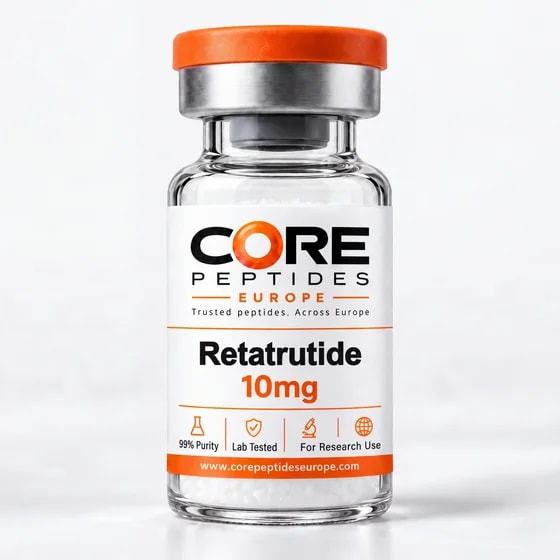
Retatrutide
Triple-agonist peptide studied in preclinical metabolic research models.
More articles
Guide
ARA-290 (Cibinetide): What Is It and What Are Its Potential Benefits?
ARA-290, also called cibinetide, is an experimental peptide being studied for nerve damage, inflammation and tissue protection. Learn how it works, its potential benefits and what human studies have found.
Guide11 min read
Guide
CJC-1295: What Is It, What Are Its Potential Benefits, and How Do DAC and No DAC Differ?
Learn what CJC-1295 is, how DAC and No DAC differ, and what human research shows about growth hormone, potential benefits and safety.
Guide10 min read
Guide
Semax Peptide: What Is It and What Are Its Potential Benefits for Focus and Memory?
Learn what Semax peptide is, how it might work, and what research says about its potential benefits for focus and memory, side effects, and safety.
Guide12 min read