



Compound researchRegeneration & Repair
KPV Peptide Research: Anti-Inflammatory Pathways, Preclinical Studies and Potential Benefits
Explore KPV peptide research, how it interacts with inflammatory pathways, and its potential benefits for gut health, skin inflammation and tissue repair. Learn what laboratory and animal studies have discovered and what remains unproven in humans.
12 min read16 sections
On this page16
What Is KPV Peptide?
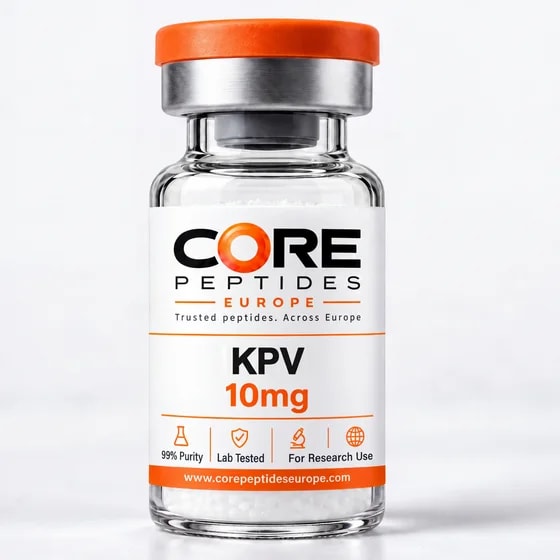
KPV is a naturally occurring peptide made up of three amino acids: lysine (K), proline (P), and valine (V).
It is derived from a larger molecule called alpha-melanocyte-stimulating hormone (α-MSH), which is involved in several biological processes, including pigmentation and inflammation regulation.
Scientists have become interested in KPV because laboratory studies suggest it may help reduce inflammation without needing the entire α-MSH molecule.
Unlike many experimental peptides that are studied primarily for their effects on hormones or metabolism, KPV research focuses mainly on inflammation, immune responses, intestinal health and tissue protection.
Most importantly, KPV is still an experimental research compound. Its potential therapeutic benefits have not been established in humans.
How Does KPV Work?
Inflammation is the body's natural response to infections, injuries and harmful substances.
Short-term inflammation is essential for healing. However, when inflammation becomes excessive or persists for too long, it can contribute to tissue damage and chronic disease.
KPV has attracted scientific attention because experiments suggest it can influence several pathways involved in this process.
1. NF-κB: Controlling Inflammatory Signals
NF-κB is a group of proteins that helps cells regulate inflammation.
When activated, this signaling system can increase the production of inflammatory molecules, including:
- TNF-α (tumor necrosis factor-alpha)
- IL-6 (interleukin-6)
- IL-8 (interleukin-8)
- Other inflammatory mediators
Research published in Gastroenterology found that KPV reduced NF-κB activation and inflammatory cytokine production in experimental intestinal inflammation models.
This suggests KPV may help regulate the intensity of certain inflammatory responses.
2. MAPK: Regulating Cellular Stress
MAPK refers to a family of signaling pathways that help cells respond to stress, injury and inflammation.
Overactivation of these pathways can contribute to inflammatory responses and cell damage.
Laboratory studies have found that KPV can reduce activation of certain MAPK signaling components.
This effect may help explain its observed anti-inflammatory activity in intestinal and skin cell experiments.
3. PepT1: Helping KPV Enter Cells
One of the most interesting discoveries about KPV involves a transporter called PepT1.
PepT1 normally helps transport small peptides into cells, particularly in the intestine.
Researchers found that KPV can use this transporter to enter certain cells and influence inflammatory signaling.
This mechanism is especially relevant to research on intestinal inflammation, although its importance can differ between tissues and experimental conditions.
Potential Benefits of KPV: What Does the Research Show?
Studies have explored several possible applications for KPV. The findings are encouraging in some areas, but the evidence comes mainly from cell cultures and animal experiments.
Potential Benefits for Gut Inflammation
One of the best-studied areas of KPV research is inflammatory bowel disease (IBD).
IBD includes conditions such as Crohn's disease and ulcerative colitis, in which inflammation damages parts of the digestive tract.
Researchers have investigated whether KPV can reduce inflammatory signaling and protect intestinal tissue.
A 2008 study published in Gastroenterology found that KPV reduced inflammatory responses in intestinal cell experiments and mouse models.
Another study published in Inflammatory Bowel Diseases reported improvements in experimental colitis following KPV treatment.
Later research explored specialized nanoparticles and hydrogels designed to deliver KPV more effectively to inflamed intestinal tissue.
Potential benefits being investigated include:
- Reducing intestinal inflammatory signaling.
- Lowering certain inflammatory cytokines.
- Protecting the intestinal mucosal barrier.
- Supporting recovery from experimentally induced intestinal inflammation.
However, these results do not establish KPV as a treatment for Crohn's disease, ulcerative colitis or other digestive conditions in humans.
Potential Benefits for Skin Inflammation
KPV has also attracted interest in dermatological research.
Skin cells are constantly exposed to environmental stressors such as pollution, ultraviolet radiation and microorganisms.
These factors can trigger inflammatory responses and oxidative stress, potentially damaging the skin barrier.
A 2025 study published in Tissue and Cell investigated how KPV affected human-derived skin cells exposed to fine particulate matter.
Researchers found that KPV reduced several indicators of cellular stress and inflammation.
These included changes in reactive oxygen species, inflammatory signaling and cell damage.
The findings suggest that KPV deserves further investigation for protecting skin cells against certain environmental stressors.
Potential applications under investigation include:
- Reducing inflammatory responses in skin cells.
- Limiting oxidative stress.
- Protecting against certain forms of pollution-related cellular damage.
- Supporting skin barrier research.
Nevertheless, there is not enough clinical evidence to conclude that KPV improves eczema, psoriasis, acne or skin aging in people.
Potential Benefits for Wound Healing and Tissue Repair
Another area of interest is tissue recovery.
Wound healing involves several overlapping processes, including inflammation control, new cell growth and restoration of damaged tissue.
Because excessive inflammation can interfere with healing, researchers have explored whether KPV can support this process.
A 2006 study published in Experimental Eye Research examined KPV in a rabbit model of corneal injury.
The researchers observed faster restoration of the corneal epithelial layer and investigated the involvement of nitric oxide signaling.
Other studies have explored KPV-containing hydrogels for damaged intestinal or oral tissues.
These findings suggest possible tissue-protective effects, although wound healing is complex and results can differ substantially between tissues.
Potential benefits being investigated include:
- Supporting repair of damaged epithelial tissue.
- Regulating inflammation during healing.
- Protecting certain tissue barriers.
- Improving experimental wound-recovery outcomes.
These findings should not be interpreted as evidence that KPV accelerates healing of ordinary skin wounds, muscle injuries or other injuries in humans.
Potential Antimicrobial Properties
Some early research suggests that KPV and related melanocortin peptides may have antimicrobial activity.
A study published in the Journal of Leukocyte Biology investigated effects against organisms including Candida albicans and Staphylococcus aureus.
Laboratory experiments identified antimicrobial activity under certain experimental conditions.
This is interesting because microbial activity and inflammation are closely connected, particularly in the skin and digestive system.
However, antimicrobial activity observed in a laboratory does not necessarily translate into effectiveness against infections in a living person.
KPV is not an established antibiotic, antifungal medication or treatment for infections.
Potential Benefits for Oral and Intestinal Tissue Protection
Researchers have also examined KPV in delivery systems designed to remain in contact with inflamed tissue.
For example, a 2021 study in Biomaterials Science explored a KPV-containing hydrogel for chemotherapy-induced oral mucositis.
Oral mucositis involves inflammation and injury of tissues lining the mouth, often occurring during certain cancer treatments.
The experimental formulation demonstrated anti-inflammatory and tissue-repair effects in preclinical models.
Similar approaches have been investigated for the intestinal mucosal barrier.
These studies are particularly interesting because they combine KPV's possible biological activity with technologies intended to improve its stability and delivery.
Importantly, the effectiveness of a KPV-containing hydrogel or nanoparticle cannot automatically be attributed to KPV alone.
Potential Effects on Inflammation-Associated Disease Processes
Beyond gut and skin research, scientists have investigated KPV in other experimental disease models.
A 2016 study examined KPV in mice with colitis-associated cancer. The researchers observed reduced tumor development in some experimental groups, with effects dependent on the PepT1 transporter.
More recent research has explored formulations containing KPV and rapamycin for vascular calcification.
Other experimental work has investigated modified KPV molecules in models involving lung inflammation.
These findings broaden scientific interest in KPV but remain preliminary.
There is currently no reliable clinical evidence that KPV prevents cancer, treats cardiovascular disease or improves lung disease in humans.
What Do Preclinical Studies Tell Us About KPV?
Preclinical studies are experiments performed before a compound has been demonstrated to work safely and effectively in humans.
They generally involve laboratory-grown cells, isolated tissues or animals.
KPV research has progressed through several of these stages.
| Research area | Main findings | Research stage |
|---|---|---|
| Intestinal inflammation | Reduced inflammatory signaling and colitis severity | Cell and animal studies |
| Skin inflammation | Reduced oxidative stress and inflammatory markers | Cell and 3D skin models |
| Tissue repair | Improved corneal healing and some mucosal repair outcomes | Animal studies |
| Antimicrobial activity | Activity against certain bacteria and fungi | Laboratory experiments |
| Inflammatory disease processes | Promising effects in selected experimental models | Animal and formulation studies |
The most consistent evidence involves intestinal inflammation, where different research groups have investigated KPV using several experimental models.
However, even repeated positive results in animals do not guarantee that the same benefits will occur in humans.
Why Are Researchers Developing New KPV Delivery Systems?
One important challenge in peptide research is getting a compound to the tissue where scientists want to study its effects.
Peptides can be sensitive to enzymes and other environmental conditions, which may affect their stability and availability.
Researchers have therefore developed experimental delivery technologies for KPV, including:
- Nanoparticles: Tiny carriers designed to protect KPV and help deliver it to particular tissues.
- Hydrogels: Gel-like materials that can retain KPV near a targeted area.
- Targeted intestinal formulations: Experimental systems designed to reach inflamed sections of the digestive tract.
For example, research published in Molecular Therapy in 2017 examined hyaluronic acid-functionalized nanoparticles carrying KPV.
The formulation reduced inflammatory responses in mouse models of ulcerative colitis.
These findings are valuable for understanding how KPV might eventually be used in medical research, but they do not establish a clinically validated delivery method.
Is KPV Safe for Humans?
Although KPV is derived from a naturally occurring peptide, that does not automatically mean it is safe to administer.
There is currently insufficient published clinical evidence to determine its safety profile in humans.
Important unanswered questions include:
- What effects might occur with repeated exposure?
- How is KPV absorbed, distributed, metabolized and eliminated in humans?
- Could it interact with medications or existing medical conditions?
- Does its safety depend on the route of administration?
- What long-term effects might occur?
The concentrations used in laboratory studies should not be interpreted as safe or effective doses for humans.
KPV remains an experimental compound, and its clinical safety and effectiveness require further investigation.
What Are the Limitations of Current KPV Research?
Despite encouraging preclinical findings, several important limitations remain.
1. Lack of controlled human studies
Most available evidence comes from cells and animals, meaning researchers cannot yet reliably predict human outcomes.
2. Differences between experimental models and human diseases
An artificially induced inflammatory condition in a mouse does not fully reproduce a complex human condition such as Crohn's disease.
3. Different formulations produce different results
Some studies use ordinary KPV, while others use nanoparticles, hydrogels, modified peptides or combinations with other compounds.
Their findings cannot necessarily be compared directly.
4. Limited long-term safety information
Preclinical studies frequently focus on relatively short experimental periods. Longer studies are needed to understand potential risks.
5. Uncertainty about clinical applications
Even if KPV consistently reduces certain inflammatory markers, researchers must still demonstrate meaningful improvements in health outcomes.
The Future of KPV Research
KPV is an interesting candidate for further scientific investigation because it is a small peptide with measurable effects in several experimental inflammatory models.
Future research is likely to focus on understanding its mechanisms more precisely, improving targeted delivery and determining whether promising preclinical results translate into meaningful clinical effects.
Areas deserving further investigation include intestinal inflammation, skin protection, mucosal healing and interactions with inflammatory signaling pathways.
Before any potential medical applications can be established, researchers will need appropriate pharmacokinetic studies, toxicology assessments and carefully controlled human clinical trials.
Conclusion
KPV is a naturally occurring tripeptide that has attracted scientific interest for its potential anti-inflammatory and tissue-protective properties.
Laboratory and animal studies suggest that KPV can influence pathways such as NF-κB and MAPK, reduce certain inflammatory cytokines and protect tissues under specific experimental conditions.
The strongest preclinical findings involve intestinal inflammation, while additional research has explored possible applications in skin protection, wound healing and antimicrobial activity.
However, potential benefits identified in preclinical studies are not the same as proven health benefits in humans.
KPV remains an experimental peptide. Its safety, effectiveness and possible clinical applications require considerably more research.
References
- Dalmasso, G., et al. (2008). PepT1-mediated tripeptide KPV uptake reduces intestinal inflammation Gastroenterology.
- Kannengiesser, K., et al. (2008). Melanocortin-derived tripeptide KPV has anti-inflammatory potential in murine models of inflammatory bowel disease Inflammatory Bowel Diseases.
- Laroui, H., et al. (2010). Drug-loaded nanoparticles targeted to the colon with polysaccharide hydrogel reduce colitis in a mouse model Gastroenterology.
- Viennois, E., et al. (2016). Critical role of PepT1 in promoting colitis-associated cancer and therapeutic benefits of the anti-inflammatory PepT1-mediated tripeptide KPV in a murine model Cellular and Molecular Gastroenterology and Hepatology.
- Xiao, B., et al. (2017). Orally targeted delivery of tripeptide KPV via hyaluronic acid-functionalized nanoparticles efficiently alleviates ulcerative colitis Molecular Therapy.
- Sun, Y., et al. (2021). Self-cross-linked hydrogel of cysteamine-grafted γ-polyglutamic acid stabilized tripeptide KPV for alleviating TNBS-induced ulcerative colitis in rats ACS Biomaterials Science & Engineering.
- Zhao, et al. (2022). A KPV-binding double-network hydrogel restores gut mucosal barrier in an inflamed colon Acta Biomaterialia.
- Getting, S. J., et al. (2003). Dissection of the anti-inflammatory effect of the core and C-terminal (KPV) α-melanocyte-stimulating hormone peptides Journal of Pharmacology and Experimental Therapeutics.
- Brzoska, T., et al. (2008). Alpha-melanocyte-stimulating hormone and related tripeptides: biochemistry, antiinflammatory and protective effects in vitro and in vivo Endocrine Reviews.
- Sung, J., et al. (2025). Lysine-Proline-Valine peptide mitigates fine dust-induced keratinocyte apoptosis and inflammation by regulating oxidative stress and modulating the MAPK/NF-κB pathway Tissue and Cell.
- Bonfiglio, V., et al. (2006). Effects of the COOH-terminal tripeptide α-MSH(11–13) on corneal epithelial wound healing: role of nitric oxide Experimental Eye Research.
- Böhm, M., & Luger, T. A. (2019). Are melanocortin peptides future therapeutics for cutaneous wound healing? Experimental Dermatology.
- Cutuli, M., et al. (2000). Antimicrobial effects of α-MSH peptides Journal of Leukocyte Biology.
- Shao, W., et al. (2021). In situ mucoadhesive hydrogel capturing tripeptide KPV: the anti-inflammatory, antibacterial and repairing effect on chemotherapy-induced oral mucositis Biomaterials Science.
- Inflammation-triggered self-immolative conjugates enable oral peptide delivery by overcoming gastrointestinal barriers. (2026). Peptide delivery research.
Compound research overview
Compounds discussed
More articles
Guide
ARA-290 (Cibinetide): What Is It and What Are Its Potential Benefits?
ARA-290, also called cibinetide, is an experimental peptide being studied for nerve damage, inflammation and tissue protection. Learn how it works, its potential benefits and what human studies have found.
Guide11 min read
Guide
CJC-1295: What Is It, What Are Its Potential Benefits, and How Do DAC and No DAC Differ?
Learn what CJC-1295 is, how DAC and No DAC differ, and what human research shows about growth hormone, potential benefits and safety.
Guide10 min read
Guide
Semax Peptide: What Is It and What Are Its Potential Benefits for Focus and Memory?
Learn what Semax peptide is, how it might work, and what research says about its potential benefits for focus and memory, side effects, and safety.
Guide12 min read